Quick Read
- Highway Shoulder Hazards: Roughly 12% of all interstate highway fatalities involve pedestrians or stranded drivers standing on the road shoulder or active lane.
- The Danger of Exiting the Vehicle: A study by the AAA Foundation for Traffic Safety revealed that 94.3% of roadside assistance worker and driver fatalities happen while people are outside their vehicle on the shoulder or roadway.
- Mechanical Damage from Running Dry: Modern diesel and direct-injection petrol pumps rely on fuel for lubrication and cooling. Cranking a dry system causes metal-on-metal friction and can trigger catastrophic high-pressure pump failure within seconds.
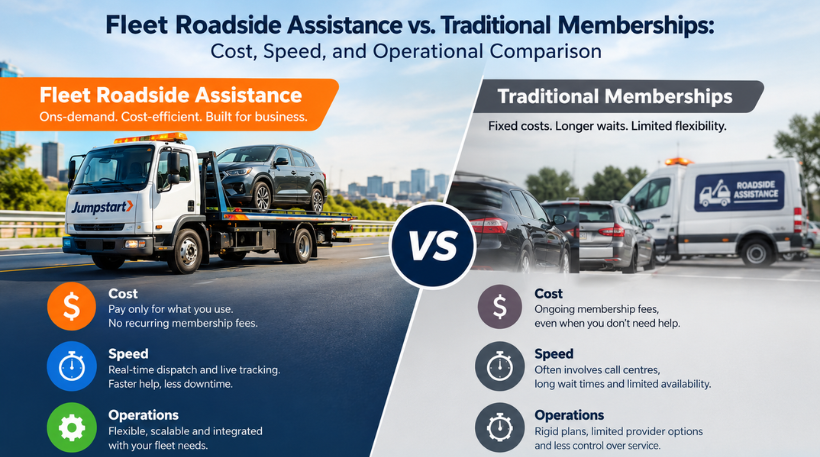
- Dispatch Speed Gap: Traditional call-center auto clubs average 60 to 120+ minutes for technician arrival during peak periods, compared to 30 to 45 minutes for GPS-based digital on-demand dispatch.
Fleet roadside assistance keeps commercial vehicles moving without expensive operational delays. Emergency roadside assistance for trucks is especially important when a breakdown occurs on a busy highway or remote freight route. Every minute a commercial truck sits idle hurts business profitability. Delivery schedules collapse rapidly when unexpected mechanical breakdowns strike. Drivers miss critical client drop-offs while revenue leaks away.
For decades, companies relied exclusively on legacy motor club memberships. Today, modern logistics operations face intense delivery pressure. Traditional subscription services no longer match rapid dispatch requirements. Fleets need flexible technology to protect tight delivery schedules.
This detailed guide breaks down costs, speed, and real-world performance. Discover how modern dispatch technology outperforms outdated subscription auto clubs.
Why Legacy Memberships Fall Short for Commercial Fleets?
Legacy auto clubs were originally built for everyday passenger vehicles. They were never engineered for high-intensity commercial operations.
The Problem with Annual Subscriptions
Traditional roadside clubs demand upfront annual membership payments. You pay static fees for every vehicle in your fleet. It makes no difference whether those vehicles ever break down.
Unused vehicles waste capital while actively driven vans experience delays. If an unregistered spare vehicle breaks down, clubs reject service outright. Fleet operators must then pay expensive emergency call-out penalties.
Slow Call Centers and Bottlenecks
Traditional emergency protocols rely on centralized telephone operators. Your stranded driver dials an eight-hundred number and waits on hold.
Operators manually collect policy details, vehicle models, and street addresses. Misunderstandings occur easily when drivers operate along unfamiliar transit routes.
Manual call centers create major delays during peak commuting hours. The clerical handoff wastes valuable business hours before help dispatches.
What Is On-Demand Fleet Roadside Assistance?
On-demand roadside assistance eliminates static memberships, call centers, and paperwork. It provides direct digital dispatch through intelligent mobile technology.
Direct Digital Dispatch
Instead of placing phone calls, drivers drop a digital pin. The platform reads the exact satellite coordinates of the vehicle.
Dispatch software routes the nearest qualified provider to the location. The driver monitors technician transit directly on a live map.
Fleet managers receive immediate status updates via centralized cloud dashboards. Everyone stays informed throughout the entire recovery process.
The Role of Jumpstart in Fleet Management
Jumpstart is a Melbourne-based platform that provides a comprehensive service for users who need roadside assistance. The app links commercial drivers directly with local certified service professionals.
Technicians arrive fully prepared with commercial-grade tools and parts. Dispatchers eliminate telephone wait times through automated routing systems.
Fleet coordinators gain complete operational oversight without locking up cash. You protect your delivery commitments with predictable, digital efficiency.
Comprehensive Comparison: On-Demand vs. Traditional Memberships
Modern commercial operations demand transparent metrics and dependable service delivery. The table below compares traditional memberships with on-demand digital platforms:
|
Operational Metric |
Traditional Auto Club Memberships |
On-Demand Roadside Platforms |
|
Pricing Model |
Fixed annual subscription per vehicle |
Pure pay-as-you-go per breakdown |
|
Dispatch Method |
Manual telephone call centers |
Instant GPS-based digital routing |
|
Average Arrival Speed |
Slow queues and delayed arrival |
As fast as possible via nearest unit |
|
Driver Out-of-Pocket |
Frequent reimbursements for excess fees |
Zero driver payments on the road |
|
Tracking Visibility |
Blind phone estimates only |
Live real-time technician GPS tracking |
|
Fleet Flexibility |
Rigid vehicle-locked registration |
Covers any company vehicle instantly |
Financial Analysis: Cost Efficiency of Pay-as-You-Go
Commercial managers must constantly evaluate operating expenses across all assets. Rigid subscription fees tie up critical working capital every year.
Cutting Wasted Overhead
Consider a regional logistics fleet operating thirty delivery vans. A traditional business roadside assistance plan costs hundreds per vehicle annually.
The company pays thousands upfront before a wheel even turns. If only five vans break down, twenty-five subscriptions generate zero return.
On-demand platforms charge strictly when actual breakdowns happen. Your maintenance budget stays liquid until you genuinely need assistance.
Removing Hidden Surcharges
Traditional roadside plans hide restrictive terms inside small print. They limit service calls to three or four incidents annually.
Exceeding that quota triggers steep out-of-pocket surcharge penalties. Clubs also enforce strict towing mileage limits.
Towing past designated distances adds heavy per-kilometer fees. Modern digital services present total transparent pricing before dispatch confirms.
Speed and Response Times: The Real Cost of Downtime
Vehicle downtime costs commercial transport companies thousands of dollars daily. Fast mechanical intervention preserves customer delivery deadlines.
- Idling labor costs: Drivers draw wages while waiting alongside highways.
- Failed deadlines: Missed deliveries trigger harsh customer penalty fees.
- Perishable losses: Refrigerated goods spoil if power systems cut out.
- Damaged reputations: Commercial partners abandon unreliable logistics suppliers quickly.
When you require roadside assistance for fleet vehicles, minutes matter. Manual telephone dispatching slows response times across regional transport routes.
Digital dispatch systems locate nearby local mechanics immediately. Automated proximity matching saves up to forty-five minutes per incident.
Why Pay-As-You-Go Roadside Assistance Is the Most Reliable Choice for Fleets?
On Demand RSA operates completely contract-free with zero binding service level agreements. Instead of forcing fleets into inflexible multi-year contracts, the platform relies on pure operational performance.
Jumpstart is currently a 100% pay-as-you-go service designed for complete cost transparency.
Here is how the four-stage pay-as-you-go process guarantees financial control and breakdown speed:
1. Transparent In-App Quote Submission:
When a breakdown request is made, the provider submits their quote through the app and the customer accepts it. There is no roadside haggling, ambiguous rate cards, or hidden dispatch markups. You know the exact job cost before committing.
2. Upfront Digital Payment Before Dispatch:
Payment is made through the app before the provider is dispatched, so the driver does not need to pay the roadside provider directly on the spot. This clear transaction protocol confirms the booking immediately and sends the closest technician without delay.
3. Centralized Company Account Management:
For a fleet, the company can manage the payment through the account rather than the individual driver paying personally. Drivers avoid fronting personal cash or filing tedious expense reports.
4. Zero Cash Handling on Dangerous Shoulders:
Highway breakdowns present acute safety risks. Completing billing digitally inside the application keeps drivers safe inside their cabins. Technicians focus purely on mechanical recovery, mounting wheels, and restoring vehicle mobility.
The Technology Advantage: GPS Tracking and Fleet Portals
Digital platforms transform unscheduled mechanical emergencies into predictable operations. Cloud architecture equips modern managers with critical operational intelligence.
Precise Satellite Dispatching
Drivers rarely know exact highway markers when mechanical issues strike. Describing vague landmarks to phone operators causes common dispatch errors.
Smart applications capture mobile satellite coordinates with pinpoint accuracy. Technicians navigate directly to the stranded vehicle without wrong turns.
Centralized Operational Portals
Managing commercial vehicles across several regional branches requires consolidation. Paper receipts from independent garages create administrative headaches for accounting teams.
Modern fleet breakdown assistance unifies emergency invoicing under one digital roof. Detailed breakdown records export directly into your maintenance management systems.
Fleet managers spot recurring mechanical issues across specific vehicle makes. Proactive insights help address maintenance issues before roadside emergencies occur.
Protecting Corporate Cash Flow
Fleet roadside assistance protects business capital while securing fast driver recovery. Modern enterprises avoid locking company funds into restrictive auto club programs.
Adopting on-demand fleet roadside assistance gives your team speed, agility, and total cost control.
Frequently Asked Questions
Why are traditional automobile memberships inefficient for commercial fleets?
Traditional memberships require expensive annual fees for every vehicle. They rely on slow telephone call centers that delay dispatches. Rigid policies also prevent servicing unlisted or temporary spare vehicles.
What is the average response time for on-demand roadside assistance?
On-demand platforms average thirty to forty-five minutes for arrival. They route requests directly to the closest technician using live GPS. This eliminates call center delays and cuts transit time significantly.
How do pay-as-you-go roadside models cut business operational costs?
Pay-as-you-go models charge only when vehicles actually experience breakdowns. Businesses avoid paying large upfront annual subscriptions for unused vehicles. Companies keep operational capital liquid while eliminating costly membership waste.
Can an app-based roadside platform guarantee faster arrival times?
Yes, apps bypass phone queues by automating the dispatch process. Algorithms ping the closest available roadside technician instantly via GPS coordinates. Drivers track arriving mechanics live, cutting down idle waiting time.
What happens to fleet SLAs during peak holiday breakdown periods?
Traditional motor clubs experience massive call center backlogs during holidays. On-demand digital networks distribute volume across diverse local service providers. This decentralized structure maintains reliable dispatch speeds even during high-demand periods.
Reference:
- Fleet Downtime & Operational Losses:
Michelin Commercial Fleet Research: The Cost of Unplanned Downtime - Commercial Truck Maintenance & Breakdown Benchmarks:
American Trucking Associations (TMC) & FleetNet America Maintenance Benchmarking - Roadside Shoulder Safety & Fatality Analytics:
AAA Foundation for Traffic Safety: Roadside Worker and Stranded Driver Analysis - Federal Highway Roadside Hazard Studies:
UC Berkeley SafeTREC: Traffic Safety Facts on Roadside Deaths
