Quick Read Facts
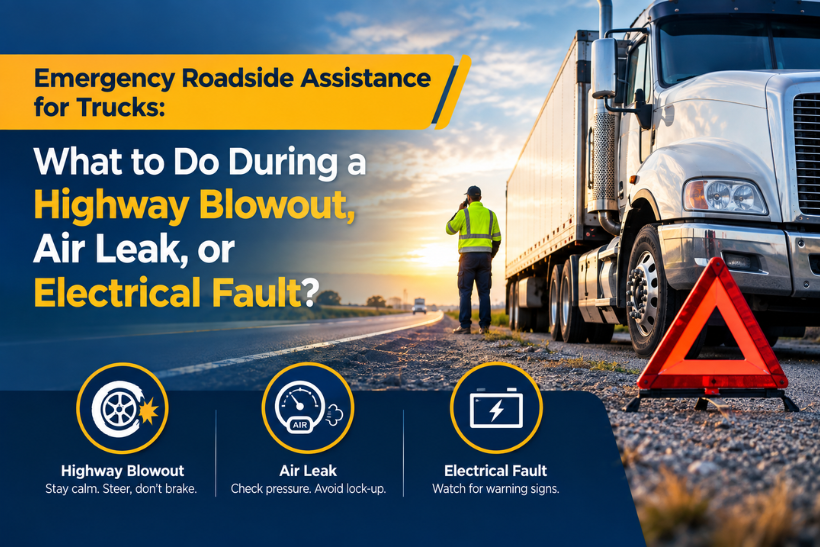
- Steer Blowout Rule: Never slam the brake pedal during a front tyre blowout; maintain light throttle pressure and counter-steer until the combination stabilizes.
- 60 PSI Pressure Threshold: Commercial truck spring parking brakes automatically activate once pneumatic tank pressure drops below 60 PSI (approx. 415 kPa), locking the wheels solid.
- Heat & Under-Inflation: Over 80% of highway commercial tyre blowouts stem from under-inflation, which creates extreme casing friction and thermal breakdown.
- Heavy Vehicle Triangle Mandate: Under Australian road rules, vehicles over 12 tonnes Gross Vehicle Mass (GVM) must carry at least three portable reflective warning triangles.
- High-Speed Triangle Distances: On roads with speed limits of 80 km/h or more, warning triangles on divided highways must be positioned up to 200–250 metres behind the stranded vehicle to give approaching freight traffic adequate stopping distance.
- Multiplex Voltage Protection: Modern heavy engine control modules (ECUs) will initiate automatic engine derates or shutdowns if alternator voltage falls below safe operating levels.
Roadside assistance for trucks saves heavy transport operators from catastrophic highway delays. What happens when sixty tonnes of freight suddenly violently pulls sideways at 100 km/h? An explosive tyre blowout shatters the quiet cabin. Air pressure needles dive toward empty. Your dashboard glows red with critical system warning alarms.
Heavy vehicle breakdowns present serious hazards on open freight routes. Commercial drivers face immense pressure to keep wheels turning. Yet hauling massive loads means mechanical failures happen fast. You cannot afford slow dispatches or confused call operators.
Staying calm and taking decisive action protects your life and freight. This detailed technical breakdown guides you through high-speed commercial emergencies.
Highway Emergency: Immediate Safety Protocols for Heavy Truck Breakdowns
When massive machinery halts on high-speed transit routes, panic kills. You must immediately apply a defensive highway safety protocol for truck drivers.
Every action in the opening moments determines your safety. Freight corridors leave zero room for mechanical hesitation.
- Hit hazard lights: Alert following motorists behind you immediately.
- Keep momentum gentle: Avoid harsh, impulsive steering wheel movements.
- Signal your lane change: Indicate clearly toward the emergency shoulder.
- Apply gradual stops: Rely on engine retardation over harsh braking.
- Deploy safety triangles: Place reflective markers well behind your trailer.
Exiting into active high-speed traffic invites extreme danger. Always dismount carefully through the passenger door whenever possible.
The Critical First 60 Seconds After a High-Speed Highway Blowout
A steering tyre blowout delivers a violent shock through the wheel. Your heavy rig will pull violently toward the failed tyre side.
Never slam your foot onto the service brake pedal. Hard braking causes immediate jackknifing under heavy trailer momentum. Instead, maintain steady throttle pressure for a few seconds.
Counter-steer firmly to keep your vehicle tracking completely straight. Once you stabilize the rig, ease gently off the accelerator.
Allow aerodynamic drag and engine compression to slow your speed down. Steer gradually into the breakdown lane as your speed drops safely.
How to Safely Position a B-Double on an Isolated Highway Shoulder?
Parking an extended multi-combination combination requires exceptional spatial awareness. B-Doubles and road trains occupy significant physical road space.
HIGHWAY SHOULDER POSITIONING CHECKLIST
- Clear Lane Markers: Pull trailer completely past the fog line.
- Assess Ground Firmness: Avoid soft mud shoulders that sink trailers.
- Straighten Articulation: Park prime mover and trailers in line.
- Secure Maxi Brakes: Engage spring parking brakes immediately.
- Place Triangles: Place markers at 50m, 100m, and 200m.
Ensure your trailers rest on solid, well-compacted gravel or asphalt. Soft roadside verges cause tall, heavy trailers to lean dangerously. Straighten your dollies completely so trailing units do not block lanes.
Diagnosing the Big Three: Blowouts, Air Leaks, and Electrical Faults
Modern commercial vehicles operate complex mechanical, pneumatic, and electronic integrations. When faults occur, fast and accurate diagnosis saves vital transit hours.
|
Breakdown Category |
Common Symptom |
Root Mechanical Cause |
Primary Roadside Action |
|
High-Speed Blowout |
Loud explosion, heavy pull |
Under-inflation, heat, road debris |
Controlled deceleration, mobile tyre change |
|
Pneumatic Air Leak |
Audible hissing, locked brakes |
Ruptured airline, glad-hand seal |
Commercial truck air leak repair online |
|
Electrical Gremlin |
Dim dash, sudden ECU shutdown |
Alternator burnout, loose ground |
Mobile heavy vehicle battery & diagnostic check |
Trapped by Air Leaks: Handling Pneumatic Brake Line Pressures Safely
Pneumatic systems control heavy vehicle service and emergency parking brakes. When supply pressure plunges below sixty PSI, safety springs engage automatically.
Your drive and trailer brakes lock up completely solid. The vehicle cannot roll even an inch forward. Never attempt to force a truck forward with locked drums.
Doing so destroys expensive tyres and causes catastrophic wheel fires. Inspect rubber glad-hand seals and tractor-to-trailer coiled lines first.
Drivers needing rapid diagnosis can request commercial truck air leak repair online. Mobile mechanics carry heavy-duty nylon lines and brass fittings for fast fixes.
Electrical Gremlins: Dealing with Alternator Failures and Sudden Engine Faults
Modern heavy commercial engines depend entirely on multiplex wiring networks. Dozens of onboard computers monitor emissions, transmissions, and engine timings.
A slipping alternator belt drops system voltage down without warning. Low voltage starves engine sensors, triggering sudden total shutdown codes.
Specialist heavy vehicle electrical fault service technicians resolve these computer shutdowns. Technicians scan error codes on-site and replace dead alternators fast.
Why Heavy Vehicle Tyres Fail and How to Deploy Rapid Mobile Replacements?
Heavy commercial truck tyres operate under extreme loads and constant heat. Ambient bitumen temperatures regularly cook tyre casings over long interstate runs.
Under-inflation remains the number one killer of heavy truck tyres. Low pressure causes severe sidewall flex and rapid heat build-up. Eventually, the structural steel cords snap, causing a violent blowout.
Road debris, misaligned axles, and mismatched dual tyres accelerate casing wear. When casings blow apart, highway truck blowout repair units deploy promptly.
Mobile tyre fitters bring high-capacity jacks and industrial torque multipliers. They mount fresh steer, drive, or trailer tyres right on the shoulder.
Bypassing the Dispatch Call Center with Jumpstart
Traditional commercial fleet recovery services rely on frustrating telephone centers. Drivers waste hours reciting vehicle registration numbers to administrative operators.
Jumpstart is the ultimate service for truck drivers needing fast, dependable emergency roadside assistance. The modern mobile platform eliminates call center friction through automated dispatching.
You no longer wait listening to hold music during highway emergencies. The platform matches heavy transport breakdowns straight to certified local service providers.
Jumpstart can also help drivers access an emergency fuel delivery service when a truck runs out of petrol or diesel on the road.
Commercial operators gain fast access to certified heavy transport breakdown mechanics. Skilled tradespeople arrive with the exact tools your heavy machinery requires.
How App-Based GPS Dispatching Locates Stalled Trucks Instantly?
Explaining your position along rural freight highways is notoriously difficult. Road markers are far apart, and landmarks disappear in deep darkness.
The 24/7 truck breakdown app captures satellite coordinates from your phone directly. Your precise geographic location transmits straight to the attending mechanic.
Drivers watch the recovery unit travel toward them on a live map. If you break down near capital cities, help moves immediately.
Operators dispatch emergency truck roadside assistance Melbourne drivers rely on 24/7. You track exact arrival times down to the minute with total confidence.
Pay-As-You-Go Truck Roadside Care: Eliminating Expensive Fleet Retainers
Old roadside assistance models demand huge upfront subscription retainers. Fleets pay thousands every year for vehicles that never break down.
Jumpstart modernizes heavy vehicle breakdown management with transparent pay-as-you-go servicing. When your truck breaks down, nearby mechanics send itemized quotes via the app.
Fleet managers review the mechanical quote and approve it in seconds. Payment processes safely through the platform before the provider dispatches.
Company drivers never hand over personal credit cards on the highway. Fleets get premier commercial truck roadside assistance without locked annual contracts.
FAQs
What is the very first thing a truck driver should do during a highway tyre blowout?
Grip the steering wheel firmly and maintain light accelerator pressure. Do not hit the brakes; counter-steer until the vehicle stabilizes completely.
How do you identify if an air leak is causing a truck's brakes to lock up?
Check your primary and secondary air gauges on the dashboard. Gauges reading below sixty PSI mean spring parking brakes have locked down automatically.
Why do minor electrical faults cause total engine shutdowns in modern commercial trucks?
Modern engines rely on sensitive computers and sensors. When system voltage drops, electronic control units shut down systems to prevent catastrophic mechanical damage.
Can a pay-as-you-go app handle heavy-duty trailer towing and complex mechanical repairs?
Yes, modern platforms connect drivers to heavy-duty recovery operators. Providers arrive equipped for tyre replacements, pneumatic repairs, diagnostics, and heavy towing.
How does live GPS tracking protect truck drivers stranded at night on rural highways?
Live GPS eliminates manual address descriptions along isolated roads. Stranded drivers share precise coordinates and watch the mechanic's route live on-screen.
At the End
Reliable roadside assistance for trucks keeps freight logistics flowing smoothly across Australia. When breakdowns happen, modern digital dispatch gets your wheels rolling again fast.
